The Open-Weight Border: How Washington and Beijing Both Put a State Gate on AI Models
The most consequential AI policy move of the week wasn’t a model release. It was two governments, on opposite sides of the Pacific, deciding within days of each other that open-weight AI models are too strategic to circulate freely.
On October 16, China’s Ministry of Commerce and Ministry of Science and Technology issued Announcement No. 48, proposing to add 40 technologies to the national catalogue of prohibited or restricted exports — 23 of them in AI. On October 20, the US Department of Homeland Security published its order barring DeepSeek from federal civilian agencies. Different instruments, same conclusion: the era when a frontier model could be both a global public good and a state-controlled asset is ending.
Beijing’s gate: weights become exports
The Chinese draft is precise in a way that shows real homework. It targets:
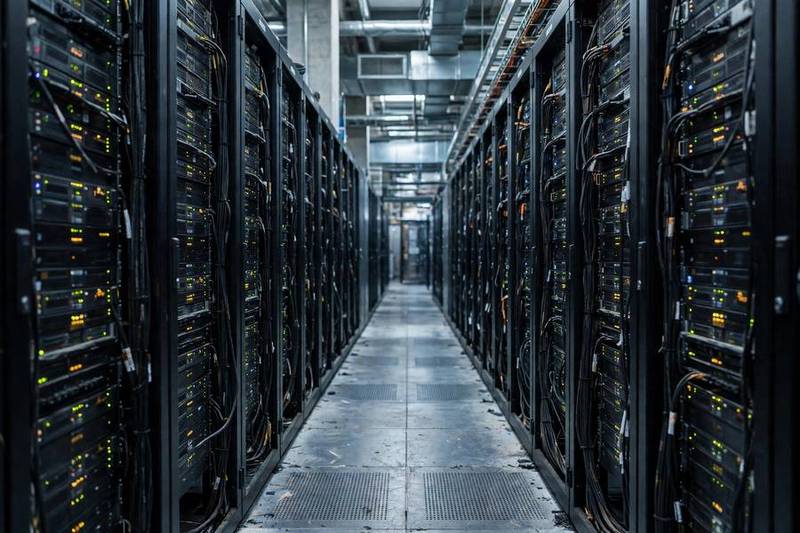
- Model weights of large language models above 2 trillion parameters, trained with more than 10^26 FLOPs, or ranked in the global top 10 by major evaluators;
- Advanced AI agents and computing clusters, plus chip-design methodology;
- Models trained on “important data” under China’s data-security law (restricted), or on stricter “core data” (banned from export outright);
- AI that writes or mutates malicious code against critical infrastructure — banned if it beats multi-engine malware detectors 60% of the time or mainstream antivirus 85% of the time.
Critically, installing a restricted Chinese model on servers abroad would count as a technology export — while API access, SaaS, apps, lightweight on-device use, and models already released as open source stay outside the controls. And the registration requirement took effect immediately on October 16, even though the catalogue itself is only a draft: companies with deals underway must already treat these technologies as controlled. Comments close November 15.
As Nathan Lambert noted in his roundup, the proposal’s reach is easy to overstate — but he also made the deeper point: a capable domestic open-weight ecosystem now matters for reasons beyond performance. Beijing clearly agrees. It spent two years building its AI reputation by giving models away; the draft keeps that door open while putting the frontier behind a license.
Washington’s gate: procurement as a weapon
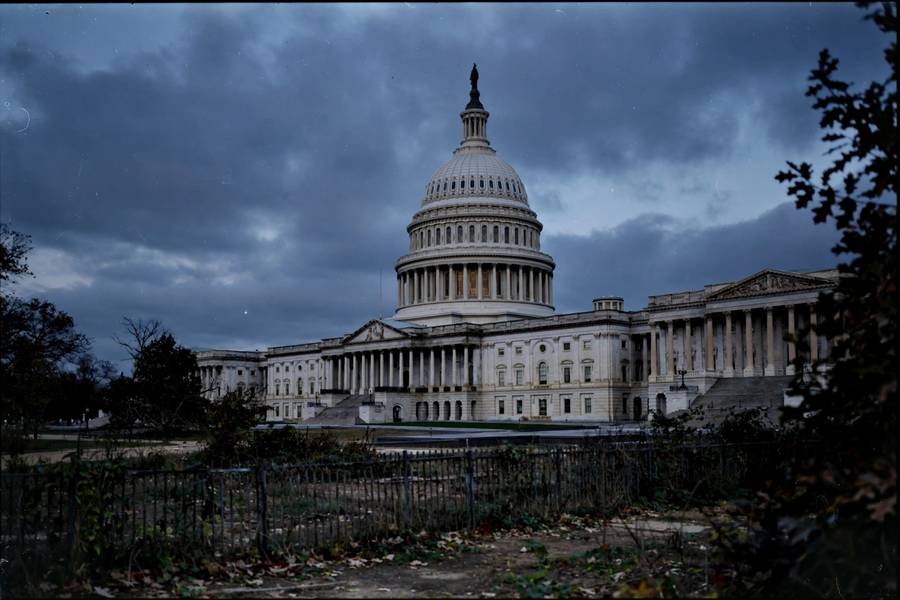
The US move mirrors the logic from the other direction. DHS’s order — published in the Federal Register on October 20, though officially dated July 24 — mandates the exclusion of DeepSeek products from federal civilian IT systems and procurements, naming Hangzhou DeepSeek Artificial Intelligence Co., Ltd. and its affiliates. The 60-day written-exception window closed around September 22; DHS must review the order within a year, by October 20, 2027.
It’s a procurement ban, not a consumer ban — agencies were advised to tighten traffic monitoring and logging during the transition — but it’s part of a pattern. In June, the US Commerce Department restricted exports of Anthropic’s Mythos 5 and Fable 5 worldwide. Washington is now gating American models on the way out and Chinese models on the way in.
The bifurcation is already priced in
Here’s what the two moves jointly imply: the stock of open models stays open; the flow of future frontier models gets gated. Models already in global circulation — DeepSeek’s V4.1 Flash, the MIT-licensed 552B-A16B release we covered on October 17 — remain beyond Beijing’s legal reach. But the next frontier release from a Chinese lab may need a government license before it can go international, just as a US lab’s frontier release already needs Washington’s blessing.
The symmetry is the story. Both governments have concluded that model weights are strategic assets, and both are building the plumbing to control their cross-border flow. The open-source exemption in Beijing’s draft and the civilian-only scope of Washington’s ban are escape valves — real ones, but narrow ones, and deliberately so.
Three things to watch: whether the final catalogue keeps the 2T-parameter / 10^26-FLOP thresholds after the November 15 comment period; what DHS’s one-year review concludes in October 2027; and whether Chinese labs accelerate their frontier releases before the gate closes — or slow them to negotiate from the inside.
Sources: Tech Times (Oct 19, 2026); AI & GPP (Oct 19, 2026); AICoder (Oct 17, 2026); OODA Loop (Oct 16, 2026); AI News Brief (Oct 21, 2026); WSNext citing the Federal Register notice (Oct 21, 2026). Threshold figures are from secondary reports of the draft text; the catalogue remains a proposal pending final wording.