The Debt Engine Behind the AI Boom: What the $45B Nscale–Anthropic Talks Really Signal
Bloomberg reported Monday that Nscale is in talks with Anthropic for a second roughly $45 billion compute deal — another 460-megawatt building at its Monarch campus in Point Pleasant, West Virginia, running on Nvidia’s Vera Rubin accelerators, with Anthropic holding a right of first refusal on a planned third building. A deal could be finalized within days, though discussions are ongoing and terms could change.
The headline is impressive. The balance sheet behind it is the real story.
A $45 billion promise on a $140 million revenue base
Nscale, the Nvidia-backed AI cloud firm, filed for a New York Stock Exchange listing under ticker NSCL in September. Its prospectus showed $103.4 billion in contracted value as of August 31 — but first-half 2026 revenue of just $140.6 million, against a net loss of $1.02 billion. The company has also said it has not yet secured binding financing commitments for the GPUs and data centers its contracts require.
Investors are pushing back: Bloomberg reported that some want Nscale’s roughly $30 billion IPO valuation target cut to $16–19 billion. That valuation dispute is not abstract. The August Nscale–Anthropic agreement — a six-year, $45 billion, 460 MW lease with delivery beginning in late 2027 — only converts into cash when Nscale actually delivers working capacity.
And delivering working capacity is where the industry keeps stumbling into physics.
Power, not money, is the binding constraint
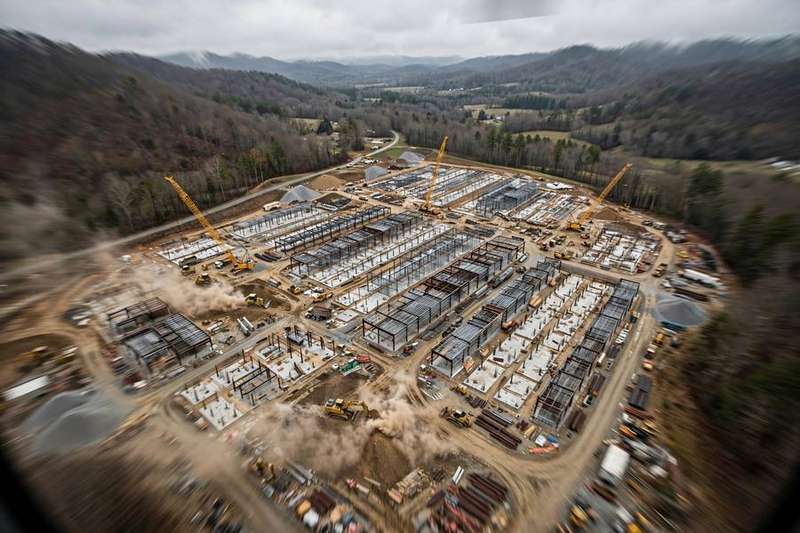
Nscale’s Monarch campus sits on more than 2,250 acres, sized for 1.35 GW in a first phase with an on-site microgrid designed to support expansion beyond 8 GW. Those are development plans, not operating assets. Deployments are scheduled to begin in late 2027 — if the grid cooperates.
It often doesn’t. Microsoft recently pulled out of a deal to anchor Nscale’s flagship data center in Loughton, Essex, after grid officials told Nscale that electricity for the site was not expected until the 2030s. Nscale’s Norwegian facility is running six months behind schedule, with 6.4 MW operational against a 30 MW target.
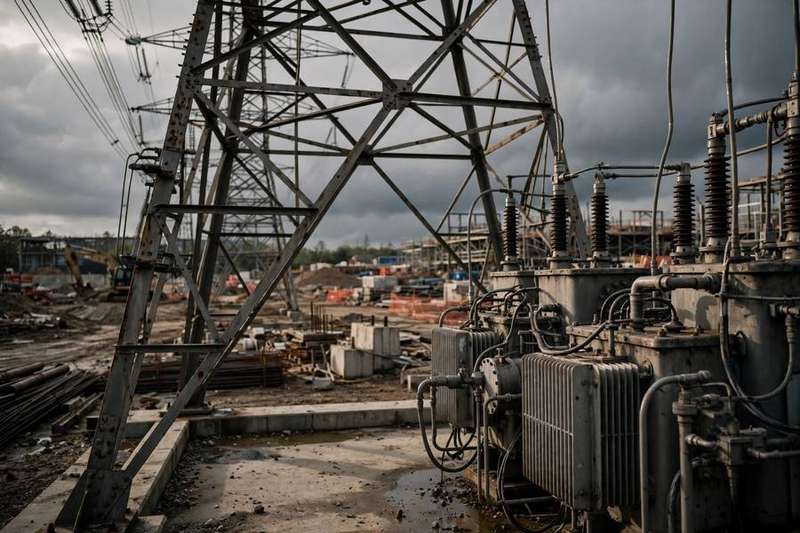
This is the pattern hiding inside every mega-deal announcement: commitments are signed in dollars, but fulfilled in megawatts — and megawatts are rationed by utilities, permitting, and physics.
The debt question is going mainstream
The Nscale–Anthropic talks arrive in the middle of a market reappraisal of the whole financing model. Last week, Nscale rival CoreWeave’s shares slumped on concerns over its roughly $50 billion debt load, helping fuel a broader AI stock rout. Bloomberg separately reported that a cohort of investors has urged Anthropic itself to lower its IPO valuation target after a series of market setbacks for AI companies.
The critique investors are sharpening is about debt-driven AI infrastructure expansion: labs are locking in tens of billions in capacity commitments funded by leveraged balance sheets, betting that inference and enterprise revenue will eventually service the buildout. The bullish counter-evidence is real — OpenAI’s enterprise revenue has overtaken consumer, and annualized revenue across the labs keeps climbing. But the gap between contracted dollars and delivered megawatts remains the industry’s most underpriced risk.
What to actually watch
Three numbers matter more than the next deal headline: delivered megawatts against contracted megawatts, revenue per megawatt, and who absorbs the shortfall when delivery slips. The second Monarch building doesn’t exist yet; Anthropic’s August deal hasn’t delivered a single watt. Until the electrons flow, $90 billion is a promise — and the party underwriting that promise reported $140 million in revenue last half.
The AI boom’s fuel isn’t intelligence. It’s leverage, delivered on schedule.
Sources: Reuters (Oct 19, 2026); TechCrunch (Oct 19, 2026); CryptoBriefing (Oct 19, 2026); AIWeekly (Oct 19, 2026). Deal details are per Bloomberg’s reporting of talks in progress; the companies declined to comment and terms could change.