The $400 Billion Question: What Nvidia Is Without Jensen Huang
Update — November 12, 2026: Hours after this article was published, Nvidia announced that Jensen Huang has resigned as president, chief executive officer and a director, effective immediately, ending his 33-year tenure. The board accepted his resignation on November 11. Chief financial officer Colette Kress will serve as interim CEO while retaining her CFO role, and director Harvey C. Jones has been named the board’s first-ever chair. A search for a permanent chief executive is under way, considering internal and external candidates. The announcement gave no reason for the departure and no findings from the independent investigation announced on November 8. Nvidia’s fiscal third-quarter results remain scheduled for November 17.
On Wednesday, November 11, The Wall Street Journal reported that Nvidia’s board is preparing to remove Jensen Huang — the co-founder who has run the company since 1993 and, in the process, become the single most important person in the artificial intelligence economy. Directors were reported to meet as soon as that evening to decide his future. As of early Thursday, Nvidia had announced no decision, and the company had not commented on the reports.
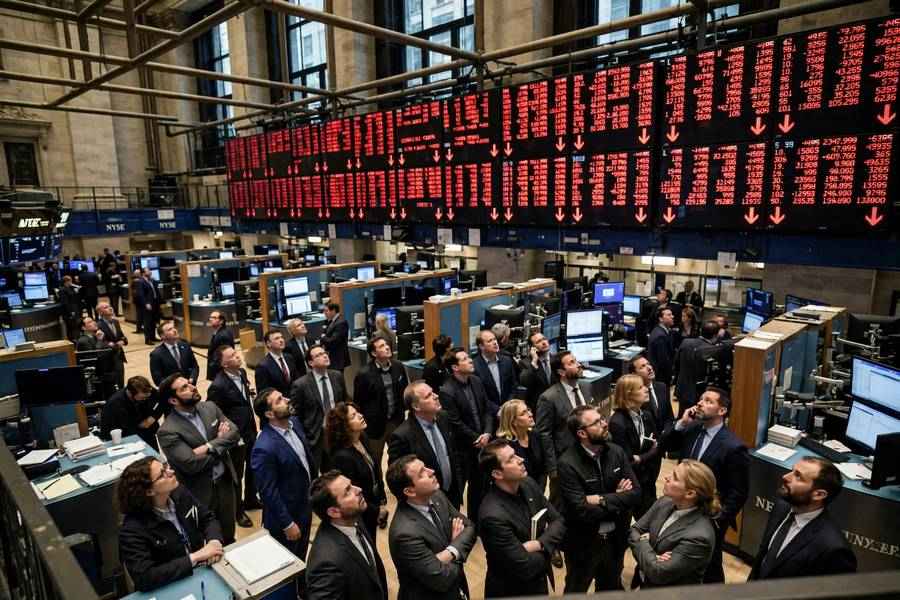
The market did not wait for the board. Nvidia shares fell more than 7% in after-hours trading when the report broke, and closed Wednesday at $168.89 — down almost 10% across the two sessions since Huang’s admission on Sunday, a loss of more than $400 billion in market value, and about 30% below the record set in early October.
That is the story in one number. The question underneath it is larger: what is Nvidia, and what is the AI boom, without the man who built both?
What is reported, and what is confirmed
The facts need to be kept in two separate piles, because they are very different piles.
What is reported: the Journal, citing people familiar with the matter, says the board is preparing to oust Huang and has been working with an outside firm to identify replacements. Reuters, citing its own source, says the board met Wednesday to decide whether to remove him. CBS News reported the same, citing two sources. Semafor confirmed the board was preparing to oust him and said directors were scheduled to meet Wednesday evening. The New York Times reported Wednesday that Huang had a second relationship, with Kimberly Powell, Nvidia’s vice president of healthcare, an executive who reports directly to him.
What is confirmed: on November 8, Nvidia’s board announced an independent investigation, overseen by a committee of independent directors with outside counsel, after reports that Huang had been “the target of a foreign intelligence effort.” On November 10, the independent directors retained Joon H. Kim, a former acting US Attorney for the Southern District of New York, and his firm Wachtell, Lipton, Rosen & Katz. Huang published a message to employees acknowledging he had been unfaithful to his wife and apologizing to his family, colleagues, partners, and shareholders, and said he supports the investigation. The board’s November 8 statement said it “has confidence in Jensen and his leadership team” and that it currently has no reason to believe US national security or Nvidia’s secrets were compromised — while adding that the review will examine all available information.
The personal admission and the security question are not the same thing, and the board’s own language keeps them apart. The first affair, as reported by Fortune, involved Megaspeed executive Alice Huang, a woman US intelligence officials believe is a Chinese operative. The Information reported November 11 that companies tied to Alice Huang helped Chinese buyers obtain $7.5 billion of Nvidia chips, including banned ones routed through neutral parties. A Megaspeed affiliate bought roughly $4.8 billion of Nvidia-powered equipment in under two years, according to an analysis in Fortune, and both Washington and Singapore were investigating the firm by October 2025. None of that has been confirmed by Nvidia, and the board has announced no finding that secrets changed hands. The investigation exists precisely because the question is unresolved — and because, for a company that sells the hardware the entire AI industry runs on, an unresolved question about its chief executive is itself a material fact.
The succession vacuum
What makes this more than a governance scandal is the structure underneath it. Nvidia has no chief operating officer. It has no formal succession plan. It has no board chair — under its 2026 proxy statement, it uses an independent lead director instead, Stephen Neal, the former Cooley chief executive, who has been on the board since 2019 and chairs its nominating and corporate governance committee. Huang, 63, has more than 50 direct reports and no identified number two. The disclosed senior leadership is thin: CFO Colette Kress, in the role since 2013, and Debora Shoquist, executive vice president of operations since 2009. Kress and Neal have been named by experts as possible interim leaders — those are experts’ suggestions, not reported board choices.
This is not an accident of neglect. It is the shape of a company built around one person’s judgment. Huang’s management style is famous in the industry: a flat organization, a direct line to dozens of executives, decisions made in his head and communicated in his voice. It worked, spectacularly, for 33 years. It also means the company has never had to answer the question the board is now being forced to answer in a single evening: who runs Nvidia if he does not?
One prominent analyst estimates Nvidia would be worth 25% to 30% less without him. The market’s first estimate was blunter: $400 billion in two sessions, on a report, before any decision. That is not a verdict on the investigation’s findings. It is a verdict on how much of Nvidia’s value the market attributes to one person — and how little of it the market believes is transferable.
The key-person problem, priced in real time
Every great founder-led company carries key-person risk. What is unusual here is the scale, and the timing. Nvidia is not a startup whose value is mostly promise. It is the infrastructure layer of the AI boom: the chips that train the frontier models, the networking that connects them, the software stack that locks customers in. Its customers include every company that matters in AI, and its order book stretches years into the future. And yet a single report about its chief executive’s future erased more market value in two days than most companies are worth in total.
Part of that is the Nasdaq’s mood. The index fell 5.52% on November 5, its worst day since April, and Federal Reserve Governor Michelle Bowman warned this week that AI investments could trigger a market correction if financial returns fail to meet expectations. The AI trade was already fragile; a governance crisis at its bellwether is the kind of event that turns a correction into a repricing.
But part of it is specific to Nvidia, and it is the part the board has to weigh. The company’s moat is not only its silicon. It is Huang’s relationships — with TSMC, with the hyperscalers, with governments on both sides of the US-China technology divide — and his record of calling the next platform shift correctly, from gaming to data centers to AI, over three decades. A successor inherits the order book. Whether a successor inherits the judgment is the question the market is pricing, and the market’s answer so far is: not at a 1-to-1 ratio.
There is also the question of what “stay” would even mean. Jason Schloetzer, an associate professor at Georgetown University’s McDonough School of Business, told Fortune before the Journal report: “I don’t expect a ‘stay or go’ decision. It will be more like a ‘stay, with less’.” A diminished Huang — stripped of the chairman-like authority he has always exercised, operating under a board that has now publicly investigated him — is a third outcome, and arguably the most likely one. It is also the hardest to price: the company keeps the founder but loses the unchecked founder, and nobody knows what that version of Nvidia looks like, because it has never existed.
The China thread
The investigation’s security dimension is what separates this from an ordinary boardroom drama, and it is also the dimension where the least is confirmed. The reported facts are: a relationship with an executive at a company under investigation in two countries for moving Nvidia hardware to China; a second reported relationship with a direct report; an independent investigation led by one of the country’s most prominent white-collar firms. The unreported facts — what, if anything, was shared, and whether any export controls were breached — are what the investigation is for.
The stakes of that question extend beyond Nvidia. The company sits at the center of the US government’s export-control regime for advanced chips: its products are the reason the controls exist, and its compliance is the reason they are credible. If the investigation finds that the chief executive’s personal relationships created a channel around those controls, the consequences would reach far past one man’s job — into the company’s license to operate, its relationship with Washington, and the trust of every customer that depends on its supply chain. If it finds nothing, the company still has to live with the fact that the question was asked at all, in public, about the person who embodies it.
That is why the board’s November 8 language matters: “no reason to believe” is not a finding. It is a holding statement. The finding comes later, and the market will price it when it arrives.
What to watch
The next reliable update will come from Nvidia’s board, a regulatory filing, or another named official source — not from another round of anonymous reports. The fixed dates on the calendar are the company’s third-quarter results, where the numbers will have to speak for a business whose leadership is suddenly an open question.
Three things will decide what this becomes. First, the board’s decision — stay, go, or the “stay, with less” middle path — and whether the announcement reads as a resolution or a postponement. Second, the investigation’s findings on the security question, which is the only part of this that can still get materially worse. And third, the succession answer: whether the board can name a credible next leader, or an interim arrangement the market believes, before the vacuum starts costing the company customers and engineers.
The AI boom has always had a single point of failure, and it was never a chip. It was the judgment of the person who decided, again and again, which chips to build. The board is about to find out whether that judgment was a feature of the company, or the company itself.
Sources: The Wall Street Journal via Reuters and TechCrunch, November 11, 2026; Reuters, November 11, 2026; CBS News, November 11, 2026; Semafor, November 11, 2026; The New York Times, November 11, 2026; Fortune on Nvidia’s board and Megaspeed, November 2026; Nvidia Board of Directors statement, November 8, 2026; CNBC on the Wachtell retention and after-hours share move, November 11, 2026; The Information on $7.5 billion in chips, November 11, 2026; Fortune, Yale’s Jeffrey Sonnenfeld and Steven Tian on the Megaspeed commercial relationship. The ouster is reported, not announced: Nvidia had made no announcement as of early November 12, and its November 8 statement expressed confidence in Huang. Share figures are as reported by Fortune and CNBC.