The Agent Checkout: ChatGPT Wallet Hands AI Your Card — and the Liability Question
On Friday, November 13, OpenAI launched ChatGPT Wallet — a payment layer that lets its dots agents complete purchases on a user’s behalf. Dots are the always-on agents OpenAI introduced in September. Until now they could find things, compare them, and put them in a cart. The wallet is the missing piece: it turns them from helpers that suggest things into helpers that buy things.
The launch is narrow. It is rolling out gradually to ChatGPT Pro subscribers in the United States who are 18 or older and hold an eligible US-issued American Express, Chase, Mastercard, or Visa credit card with a US billing address. Debit cards and virtual cards are not supported at launch. And it works only inside conversations with a dot — not in Chat, Work, or standalone Codex threads. That is a deliberately small blast radius for a feature that touches people’s money. The interesting question is not whether the first version works. It is what happens when the constraints come off, because OpenAI has already said they will.
How a purchase actually works
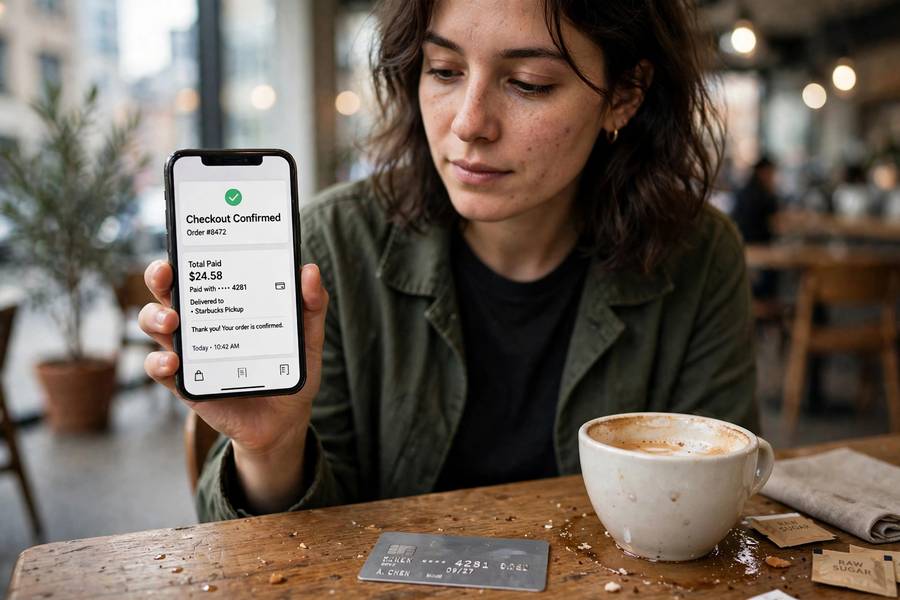
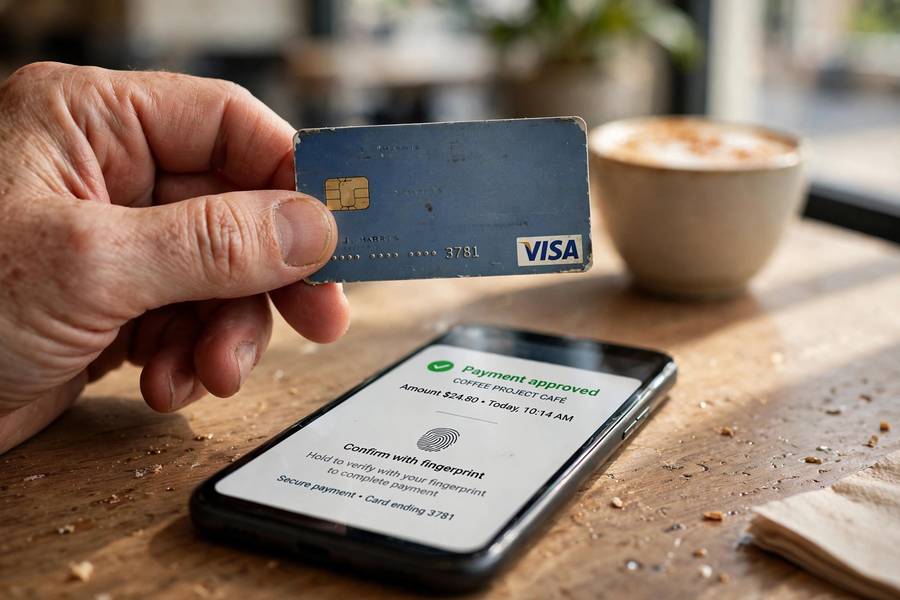
The mechanics are careful, and the care is the point. A user registers a card once. When a dot finds a product, the user reviews the items, the total, and the card to be used, then approves the purchase with a security check such as Face ID or a fingerprint. Only then does the transaction go through — and the agent never sees the real card number. The payment network issues a fresh token for that single purchase, the same model as tap-to-pay and Apple Pay, so a stolen token is useless after one use. Neither the agent nor the merchant receives the actual card details.
OpenAI says it is the first wallet that lets agents pay without access to users’ actual card details and that requires a security check for every purchase. The transaction itself is directly between the user and the merchant: the merchant sets the price and handles shipping, returns, and customer service. Existing card benefits — points and rewards — and dispute protections for eligible purchases are maintained. OpenAI is taking a 0% cut on transactions at launch, according to CNBC.
Behind the wallet is a roster of incumbents. It was built with American Express, Mastercard, and Visa. OpenAI says it is working with fraud-prevention firms Forter, Riskified, Sardine, and Signifyd, and payment providers Adyen, Checkout.com, and Stripe. It also published a Commerce Partner Playbook alongside the launch, a guide for merchants preparing for agent shoppers. The message to the payments industry is unmistakable: OpenAI is not trying to replace you. It is trying to become the front door to your checkout — and it is inviting you to hold the door open.
That framing matters because the alternative — an agent that holds your card itself — would have been a non-starter with regulators, card networks, and every fraud team in the industry. Tokenization plus per-purchase approval is the design that makes the whole thing defensible. It is also, for now, the design that limits it.
Why now, and why free
The timing is not an accident. Three days earlier, on November 11, OpenAI launched claimable business profiles in ChatGPT — the storefront. Wallet is the checkout. Together they describe a complete loop: a business claims its profile, an agent recommends it, and the same agent completes the purchase without the user ever leaving the conversation. OpenAI is building the whole funnel, and it is doing it in the open, one piece at a time, before its rivals assemble theirs.
The rivals are not waiting. On the same day Wallet launched, Google added Google Wallet to Gemini’s connected apps, rolling out to all Gemini app users in the US, letting the assistant answer questions based on a user’s spending. The two companies arrived at the same place on the same day from opposite directions: Google from the wallet you already have, OpenAI from the agent that will use it. The race is now over who owns the moment a person decides to buy — the assistant that knows what you want, or the wallet that already holds your money.
The 0% cut is the tell. OpenAI is not launching a payments business; it is buying distribution. A take rate would have slowed merchant adoption and invited a fight with the card networks. Zero, at launch, buys goodwill and, more importantly, volume: every transaction teaches the system how agent shopping actually behaves, which merchants convert, where the fraud shows up, and what users will and will not approve. The data from this narrow rollout is the product. The fee can come later — and the word “launch” in front of 0% is doing a lot of work.
The question no token can solve
Strip away the launch details and one question remains, and it is not a technical one. When an agent buys the wrong thing, who is responsible?
The current answer is: the user, because the user approved it. Every purchase requires a review and a biometric check. That is a clean allocation of liability — as long as users actually read what they are approving. But the entire value proposition of an agent is that you do not have to read everything. The product works by reducing the friction of shopping; the safety model works by preserving exactly that friction at the moment of payment. Those two forces are pulling in opposite directions, and the tension grows with every successful purchase. A user who approves ten correct orders without thinking is a user who will approve the eleventh without thinking either — and the eleventh is the one that matters.
OpenAI knows this, which is why full delegation — letting an agent buy within pre-set spending limits, categories, or time periods — is on the roadmap, with no date given. That is the real product. A wallet that requires a Face ID scan for every order is a demo of agent commerce. A wallet that lets you say “buy the usual, under $40, only from these stores” is agent commerce. And the moment delegation arrives, the liability question stops being hypothetical. If an agent buys within its limits but buys the wrong thing, is that the user’s fault for setting the limits, the merchant’s for the listing, or OpenAI’s for the agent’s judgment? No existing consumer-protection framework answers that cleanly, because no existing framework contemplates a buyer that is not a person.
The merchants have noticed. United Airlines has said it will block unauthorised third-party AI agents from buying tickets, and Amazon blocks agents from buying on its platform. Some of that is fraud prevention and some of it is control: a merchant that sells through an agent loses the relationship with the customer, the upsell, the data, and the ability to set the terms of the transaction. OpenAI acknowledges that some sites are currently blocking agent purchases unintentionally and says it plans to learn from real-world usage during the limited rollout. The subtext is a negotiation that has barely begun: merchants will decide, site by site, whether an agent is a customer or a scraper with a credit card.
There is also the question of what the agent is optimizing for. A human shopper has a budget, a brand preference, and a tolerance for substitutes. An agent has instructions and a context window. When a dot substitutes a product, chooses a seller, or accepts a price, it is making judgments the user did not explicitly make — and the user is being asked to ratify them with a thumbprint. The first time a substituted item turns out to be a counterfeit, a price turns out to be dynamic, or a “best option” turns out to be a sponsored one, the dispute will not be about the token. It will be about who the agent was working for.
What to watch
The rollout itself will answer the easy questions: how many Pro subscribers use it, which categories convert, where the fraud concentrates. The harder questions have longer clocks.
First, delegation. The day OpenAI ships pre-set spending limits is the day agent commerce stops being a supervised demo and starts being a system with real autonomy — and real liability gaps. Watch the terms, not the feature list: who bears the cost of an agent’s mistake inside its limits will be written in the fine print before it is tested in a courtroom.
Second, merchant resistance. If large retailers keep blocking agents, Wallet becomes a niche tool for small merchants who need the distribution. If the card networks and fraud firms make agent transactions safe enough, the blockers will quietly stand down — and the Commerce Partner Playbook will start looking less like an invitation and more like a standard.
Third, the fee. Zero percent is a launch price, not a business model. When OpenAI starts taking a cut — and it will, once the volume is there — the question becomes whether it charges the merchant, the user, or the network, and whether the networks, who currently keep the interchange, are willing to share it with the company that brought the buyer.
And fourth, the first big dispute. Somewhere in the next year, an agent will buy something expensive, wrong, or both, and the user will say they did not understand what they approved. The dispute protections OpenAI cites are built for human shoppers who clicked the wrong button. They have never been tested on a shopper who is software. How that case resolves — refund, chargeback, or a shrug — will set the precedent for everything that follows.
On the same day Wallet launched, the Federal Reserve’s Financial Stability Report noted that 87% of its market contacts now name AI as a salient risk to the financial system — up from 50% in the spring. That survey is about debt and valuations, not checkout buttons. But it captures the same shift from a different angle: AI is no longer a technology story. It is a story about who holds the money, who moves it, and who is responsible when it moves wrong. ChatGPT Wallet just brought that question to the checkout page.
Sources: OpenAI, “Introducing ChatGPT Wallet,” November 13, 2026, and OpenAI Help Center, “Making purchases with ChatGPT Wallet”; OpenAI Commerce Partner Playbook, November 2026; CNBC on the 0% launch take rate, November 13, 2026; The Next Web via AI Agent Update on United Airlines and Amazon blocking agent purchases, November 2026; Google Wallet in Gemini connected apps, November 13, 2026; Federal Reserve, Financial Stability Report, November 2026. Availability, eligibility, and the per-purchase approval requirement are as stated by OpenAI; full delegation and international expansion are on the roadmap with no announced date.