The AI Boom Isn't Cracking — It's Being Repriced
Two numbers landed on the same day, October 23, and together they read like an obituary for the AI boom. OpenAI lowered its proposed valuation from $1.4 trillion to $1.25 trillion while seeking roughly $30 billion in fresh funding. Anthropic’s draft IPO prospectus showed a $80.7 billion net loss for the first half of 2026, against $16.3 billion in revenue.
The boom is not cracking. It is being repriced — and the repricing tells us more about the next phase of the AI industry than any funding announcement has all year.
First, deflate the two numbers
Neither figure means what the headline suggests.
OpenAI’s $150 billion “cut” is a change to a proposed valuation in an ongoing private negotiation, not a loss of market value. The revised $1.25 trillion target is still about 47% above OpenAI’s March 2026 post-money valuation of $852 billion. Bloomberg reports investor pushback on the higher figure, with Coatue discussed as a potential co-lead alongside BlackRock and UAE funds — but until the round closes, the number can move again in either direction.
Anthropic’s $80.7 billion loss is even more misleading. Roughly $72 billion of it is non-cash accounting charges from changes in the estimated value of convertible instruments — paper, not cash out the door. The cash-relevant numbers sit underneath: revenue up from $1.1 billion in the first half of 2025 to $16.3 billion a year later, a growth rate most companies never see in their lifetime.
So no, the industry is not suddenly unprofitable in the way the headlines imply. The real story is in the numbers that are not accounting artefacts.
The number that actually matters: $9 billion in six months
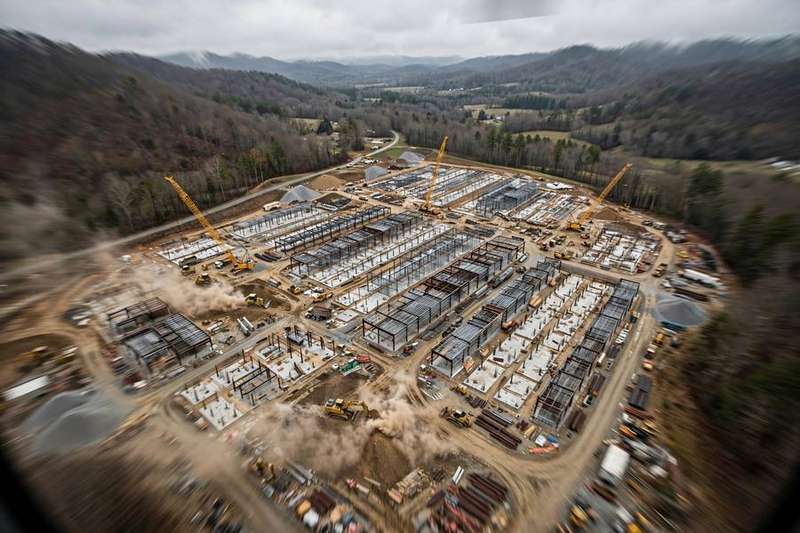
Anthropic spent nearly $9 billion on computing and infrastructure in the first half of 2026, up from $2.3 billion a year earlier — more than it spent in all of 2025. Its reported cloud, computing and infrastructure obligations run above $600 billion, with some estimates reaching $750 billion once prospective agreements are included. Much of that spending is tied to contracts that cannot easily be cancelled.
OpenAI, meanwhile, faces projected cash spending of approximately $278 billion through 2030.
This is the structural tension at the heart of the frontier business model: revenue is growing at a historic pace, and costs are growing at a historic pace too. Anthropic’s third-quarter revenue reportedly rose 45% sequentially to $16.8 billion — impressive, but slower than the more-than-doubling between the first and second quarters. When your costs are locked into non-cancellable multi-year contracts, a decelerating growth rate is not a footnote. It is the whole question.
Investors are not asking whether AI works. They are asking whether the revenue curve stays ahead of the infrastructure curve, and for how long.
Why the timing is not an accident
The repricing arrives alongside a broader tech selloff, after mixed earnings from Meta and Tesla intensified worries that AI infrastructure spending is growing faster than returns. It also arrives just as both companies prepare for public markets — OpenAI reportedly eyeing a 2027 IPO, Anthropic’s draft prospectus already circulating.
That sequence matters. Private rounds let companies set their own narrative; public markets do not. A $1.5 trillion Anthropic valuation — reportedly discussed, below earlier expectations near $2 trillion — would still demand that investors believe growth continues and margins improve. The draft prospectus is, in effect, a dress rehearsal for that scrutiny, and the market’s reaction to it is the rehearsal’s verdict: growth, yes; blank cheque, no.
What repricing changes, and what it doesn’t
Three consequences follow, none of them fatal:
1. Capital allocation becomes the product. The next phase of competition is less about who trains the biggest model and more about who converts compute spend into durable revenue most efficiently. Claude Code’s enterprise traction shows one version of that conversion — tools embedded in workflows that customers keep paying for. The labs that win will be the ones whose revenue is recurring, not just impressive.
2. Infrastructure lock-in becomes a risk factor, not a moat. Non-cancellable commitments secure capacity in a compute-starved market, but they remove flexibility if demand weakens or if model architectures shift toward cheaper inference. The same contracts that look like foresight today could look like ballast tomorrow.
3. The supplier paradox sharpens. Amazon, Google and Microsoft sell Anthropic and OpenAI their cloud capacity while building competing models. That overlap was always awkward; at hundreds of billions of dollars of commitments, it becomes a strategic vulnerability that prospectus readers will price in.
What repricing does not change: demand. $16.3 billion in half-year revenue, up fifteen-fold year over year, is not a bubble statistic — it is evidence that enterprises are actually buying. Bubbles are characterised by valuations without revenue. This market has valuations and revenue, plus costs to match.
The verdict
“Is the AI boom cracking?” is the wrong question. Booms crack when the underlying demand turns out to be imaginary. Here the demand is real, the revenue is real, and the costs are very real too. What is cracking is the assumption that growth alone justifies any price, any commitment, any burn rate.
The next phase of the AI industry will be judged less on how much capital companies attract and more on how effectively they convert it into sustainable earnings and cash flow. OpenAI’s $1.25 trillion and Anthropic’s prospectus are the first drafts of that new test. Neither company failed it. But for the first time, both are being asked to show their working.
Sources: BraveNewCoin — OpenAI cuts $150B valuation as Anthropic reports $80B loss (Oct 24, 2026), citing Bloomberg and The Wall Street Journal’s review of Anthropic’s draft prospectus; AI Briefing — daily briefing (Oct 24, 2026). Valuation figures are proposed/negotiated, not closed-round values; Anthropic’s loss includes ~$72B in non-cash charges.