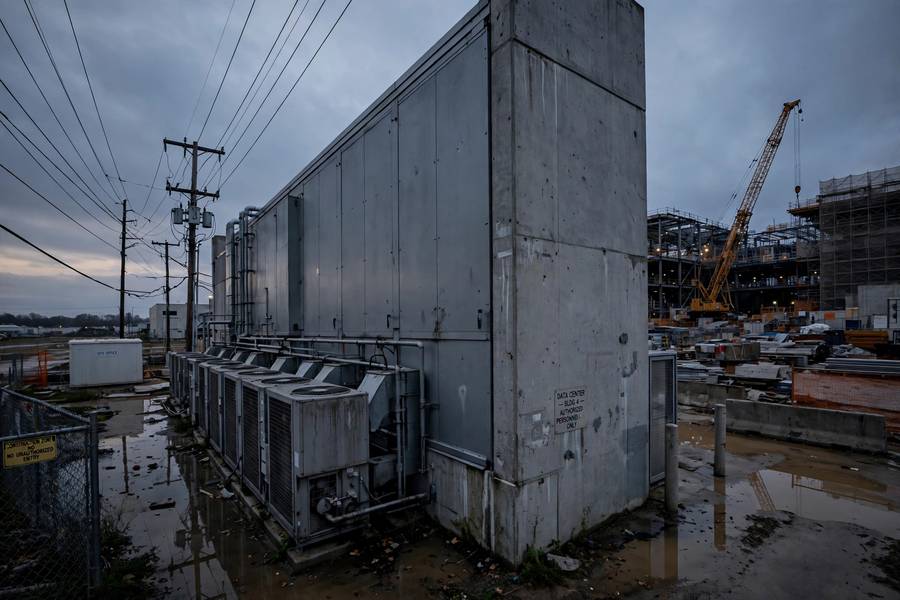
The AI Industry Just Hit a Wall — and It's Made of Concrete
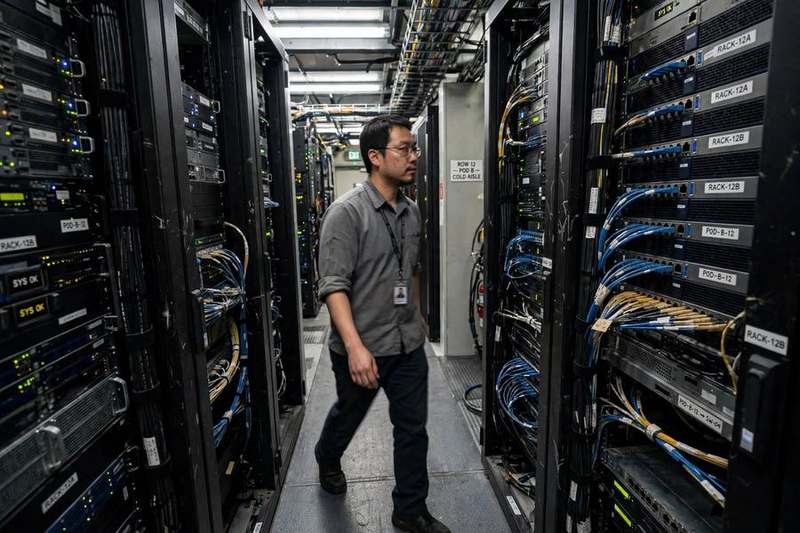
For three years the AI story has been about what models can do. This week it became about something far more mundane: whether there is a building, a chip, and a power line available to run them in. Amazon CEO Andy Jassy said on Friday that AWS cloud capacity is largely sold out through 2027, with significant commitments extending into 2028. Read that sentence twice. The world’s largest cloud provider cannot sell you a large block of AI compute next year, because it is already gone.
This is not a demand problem. It is the opposite — and that inversion changes how the whole industry should be read.
Sold out, not slowing down
Jassy’s remarks, made on a video podcast with Andreessen Horowitz’s Ben Horowitz and Erik Torenberg, are striking for their bluntness: 2026 capacity is sold out, 2027 is “largely sold out,” and “a good chunk of 2028 is sold out.” AWS keeps some capacity back for on-demand users and services like Bedrock and EC2, but Jassy said the “big chunks” are committed. His summary of demand was a single word: “insatiable.” He added that Amazon “could invest a lot more and it wouldn’t be a bad use of capital” — this from a company that already guided to about $220 billion in 2026 capital expenditure.
The same week delivered the rest of the picture. Meta reported $64.6 billion in quarterly revenue, up 26%, yet its shares fell nearly 7% — because it projected $135–145 billion in 2026 capital spending, mostly for AI infrastructure, and posted a $2.12 billion quarterly free cash flow deficit. Microsoft’s Azure passed $100 billion in annual revenue with 43% growth. Google’s Sundar Pichai warned shortages could last into 2027. Every hyperscaler is telling the same story from a different angle: the bottleneck is physical.
Why this reframes the valuation debate
Yesterday’s headlines asked whether AI valuations have run ahead of revenue. The capacity story asks a different, harder question: what happens when revenue demand exists but the infrastructure to serve it cannot be built fast enough?
A sold-out order book is, in one sense, the best news a supplier can report — it means future revenue is unusually visible. Amazon reports third-quarter results on October 29, and investors will listen less for growth than for timelines: when do these bookings turn into usable capacity, and how quickly does that turn into revenue? Building data centers takes years; securing advanced chips takes negotiation and luck; depreciation on those assets arrives long before the revenue does. The near-term debate shifts from “will customers show up?” to “can you build fast enough, and at what cost to margins and free cash flow?”
That is also why Meta’s market reaction matters more than its earnings beat. A company growing revenue 26% fell 7% on the cost of staying in the race. The market is no longer rewarding AI ambition in the abstract; it is pricing the cash cost of concrete, silicon, and electricity.
The supplier paradox, sharpened
Jassy’s answer to the bottleneck is telling: Amazon’s own Trainium chips, positioned as a cheaper alternative to the dominant supplier, with roughly 30–40% better price-performance by his account and more than $225 billion in future Trainium revenue commitments, including agreements with Anthropic and OpenAI. A decade ago Amazon faced the same problem with Intel dominating server processors and answered it by building Graviton; Jassy called the Annapurna Labs acquisition behind both efforts possibly the best deal in Amazon’s history.
But the paradox remains: Amazon, Google, and Microsoft sell Anthropic and OpenAI their cloud capacity while building competing models. At hundreds of billions of dollars in commitments, that overlap stops being awkward and becomes a strategic vulnerability — for both sides. The labs depend on suppliers who are also rivals; the suppliers depend on customers who are also rivals. Sold-out capacity does not resolve that tension. It intensifies it, because neither side can walk away while capacity is scarce.
What to watch next
Three things will tell us whether this is a two-year construction lag or a structural ceiling:
1. Build-out speed versus bookings. If AWS, Azure, and Google Cloud convert today’s sold-out bookings into operating capacity on schedule, the crunch is a lag. If power permitting, chip supply, or construction delays stretch timelines, scarcity itself becomes a moat for whoever booked first — and a tax on everyone else.
2. The efficiency race. Trainium, custom silicon, and inference optimization are no longer cost-saving side projects; they are the difference between serving a sold-out book profitably and serving it at a loss. Watch for price-performance claims to be tested against real workloads, not launch slides.
3. Who gets rationed. When capacity is scarce, allocation is strategy. Startups, researchers, and smaller enterprises do not have multi-year pre-commitments. If the frontier’s compute goes to the highest bidder by default, the next generation of labs may be priced out before it exists — a concentration risk no benchmark captures.
The verdict
The AI industry spent years worrying that models would hit a data wall or a capability wall. The wall it hit first is made of concrete: buildings that take years to permit and build, chips that take quarters to fabricate, and power grids that cannot be wished into existence. That wall does not mean the boom is over — sold-out demand is the opposite of a bust. But it does mean the next phase of competition will be won less by whoever trains the cleverest model and more by whoever can actually pour the concrete, secure the silicon, and keep the lights on. The labs are no longer just software companies. They are, whether they like it or not, infrastructure companies — and infrastructure is judged on delivery dates, not demos.
Sources: Reuters (Oct 23, 2026); CoinCentral weekly recap (Oct 24, 2026); FourWeekMBA AI Weekly (Oct 24, 2026). Capacity and spending figures are company statements as reported; build-out timelines remain subject to execution risk.