The AI Trade Broke: Nasdaq's Worst Day Since April as Politics Hits the Data-Center Boom
For two years, the AI trade had one direction. On Thursday, November 5, it broke — hard. The Nasdaq Composite fell 5.52% to close at 24,315.00, its worst single day since the April 2025 tariff selloff and more than 10% below its October 6 record, putting the index in correction territory. Roughly $2 to $2.5 trillion in Nasdaq market value evaporated in one session, by Reuters’ estimate.
The damage was not evenly spread. It concentrated exactly where the AI boom lives: the companies that sell the picks and shovels.
What fell, and how far
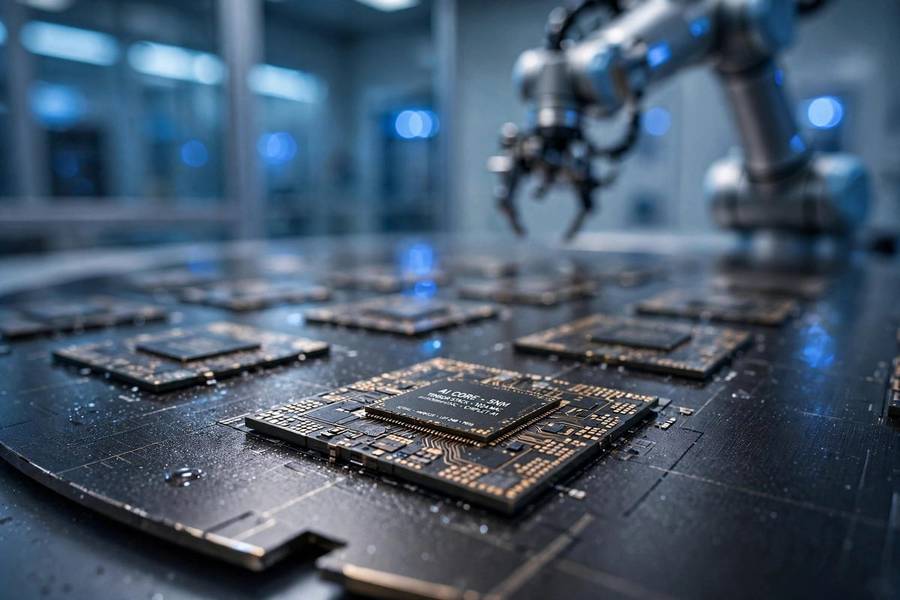
The Philadelphia Semiconductor Index dropped 12.3%, its second-largest one-day fall on record. Nvidia lost 9.2% — nearly $450 billion in value in a day. AMD fell 17.4%, Micron 17.3%, SanDisk 21.8%, CoreWeave 10.5%, and Intel 10.5%. The Nasdaq 100 dropped 6.4%, its steepest one-day decline since March 2020. The S&P 500 fell 4.4% and the Dow dropped 3.4%, or 1,153 points.
The buyers of the hardware held up better than the sellers. Meta fell about 4%, and Amazon and Alphabet also declined — but the market was pricing a slower buildout, not the disappearance of AI. As one summary of the session put it, the companies that sell to the buildout fell two to four times harder than the companies that buy from it.
The trigger was politics, not earnings
There was no failed funding round, no default, and no collapse in demand. The trigger was the November 3 midterm elections, in which Democrats swept Congress and made gains in several key data-center states — and data centers themselves were on the ballot.
Of the 36 governors elected this time, 34 support at least one form of regulation on data centers. Voters decided 41 ballot measures on data-center construction across 10 states, and 40 passed in favor of restricting or regulating the facilities. Texas governor-elect Gina Hinojosa has pledged a temporary pause on new data-center approvals, and Senator Bernie Sanders has called for a national moratorium. UBS estimated that roughly 30% of expected U.S. data-center capacity additions for 2028 could be at risk from construction pauses.
The context matters: the Nasdaq 100 had already entered correction on Monday, November 3, as investors grew wary of Big Tech’s AI spending and saw little evidence of adequate returns. The election result turned a valuation doubt into a timing risk. JonesTrading’s Michael O’Rourke told Reuters the lasting theme of the election is “the slowdown of the data center buildout,” and analysts quoted by Fox Business expect the buildout to become slower and more expensive.
One caution against overreading the day: no law has changed. Congress does not take power until January, and nothing has been enacted. What moved was the probability investors assign to future permits, power prices, and water rules — and the schedule on which trillions of dollars of planned capacity gets built.
The counter-bet arrived the same day
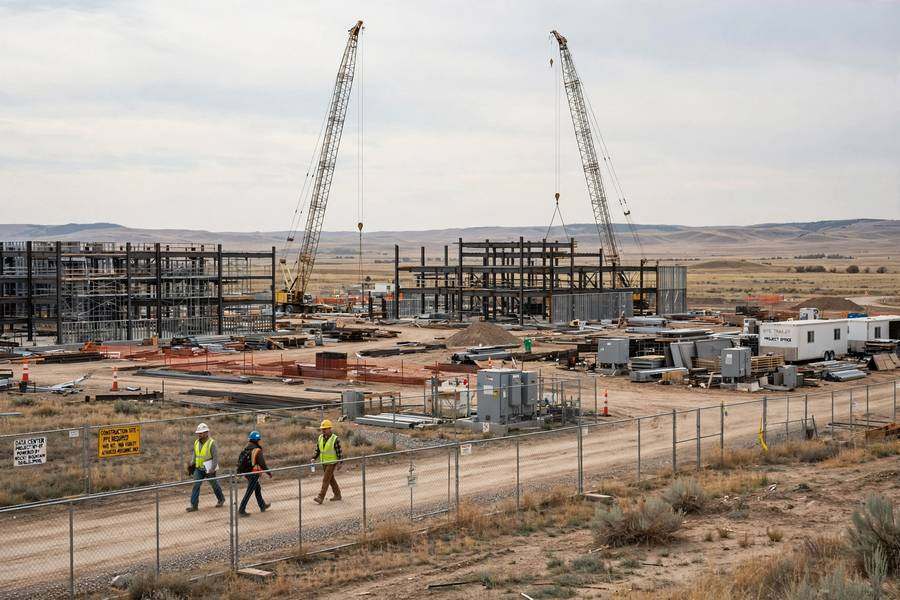
While the market was selling the buildout, Google was buying it. On November 5, the company announced its first data center in Wyoming — a long-term $17 billion investment in Laramie County, near Cheyenne, on a 716-acre site known locally as Project Tembo. The campus will be powered by a first-of-its-kind commercial-scale 702-megawatt fuel-cell development with carbon capture and storage, contracted through American Electric Power; AEP is investing about $4 billion in the plant under a 20-year power purchase agreement, with full operation expected by the end of 2028. The fuel cells will be manufactured in the United States by Bloom Energy, and captured carbon is slated for permanent storage at Tallgrass Energy’s Eastern Wyoming Sequestration Hub. Google says it will pay for 100% of the power the campus uses and air-cool the facility to limit pressure on local water supplies. On November 6, Crusoe confirmed Google had taken over its pre-developed Wyoming site.
Google was not the only builder pushing ahead. Amazon confirmed a Somervell County campus as a direct offtaker from the Comanche Peak nuclear plant, and TeraWulf locked in engineering and a Google credit backstop for Anthropic’s roughly 401-megawatt Kentucky lease. But the week also produced a counter-signal from the other side of the ledger: the Financial Times reported on November 5 that Microsoft declined an option to take additional computing capacity from UK infrastructure developer Nscale in Ward County, Texas.
What to watch next
The selloff spread to Asia on Friday, and the question now is whether November 5 was a repricing of the schedule or the start of a repricing of the thesis. The next hard data point is Nvidia’s earnings on November 17 — its language on supply, power, and customer timing will show whether orders are slipping or only the schedules.
Until then, the two stories of November 5 sit side by side: a market that suddenly doubts how fast the AI buildout can proceed, and the largest builders still writing multi-billion-dollar checks to proceed with it. One of them is wrong about the pace. The other is wrong about the price.