Anthropic's $3.4 Billion Generator Deal: The AI Race Is Now a Power Race
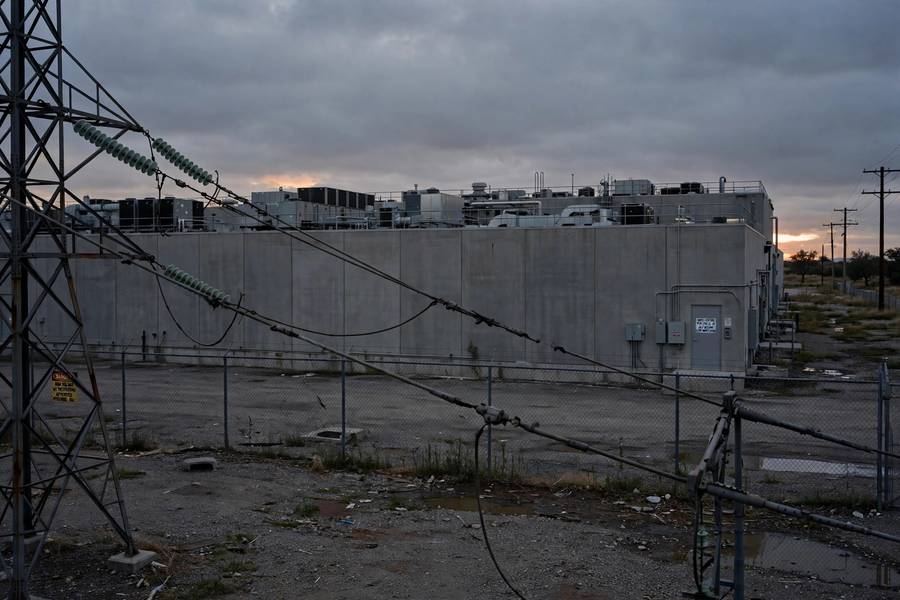
The AI race has a new bottleneck, and it is not chips. It is electricity — and Anthropic has reportedly just spent $3.4 billion to buy its own.
The Financial Times reported on Sunday, November 8, that Anthropic struck a deal worth about $3.4 billion to secure commitments for 1.7 gigawatts of heavy-duty gas-fired generators, taking over orders that San Antonio-based OnePWR Solutions placed with Caterpillar roughly two years ago. The transaction was reportedly agreed in late September and only became public this weekend. Reuters relayed the report and said it could not independently verify it; neither Anthropic nor OnePWR responded to requests for comment.
If the report holds, the FT characterized it as the largest known single purchase of power-generation equipment by an AI lab. There is one piece of corroborating public record: a Piper Sandler deal page dated September 2026 lists a $3.4 billion sale of OnePWR’s power-generation platform to an unnamed “frontier AI laboratory.” It does not name Anthropic or give a capacity figure — but the price matches to the dollar.
What the deal is — and what it is not
The details matter, because the headline invites misreading. Anthropic did not buy OnePWR. It did not acquire the supplier, and none of OnePWR’s employees transferred to the AI company, according to the FT’s account. What it bought was the equipment commitments — the generator orders themselves — plus the engineering and construction capabilities needed to install them.
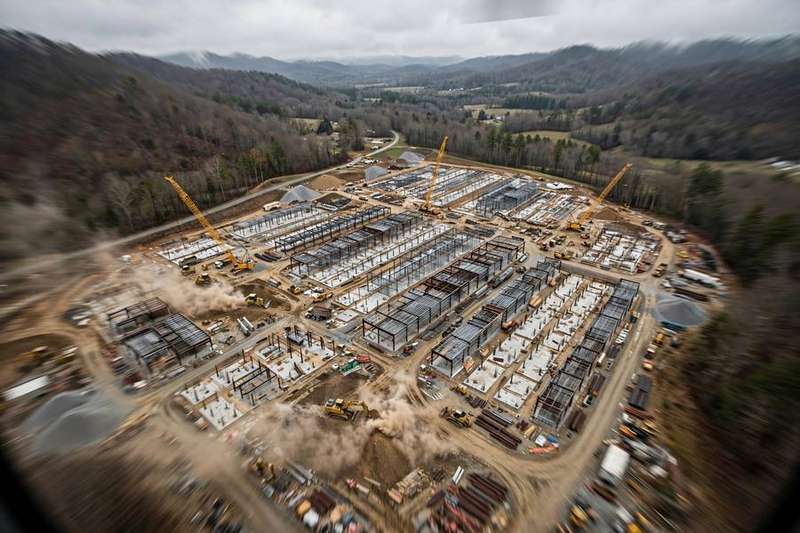
That distinction is the story. A commitment for 1.7 GW of generators is not 1.7 GW of electricity already flowing to a data center. No deployment sites, delivery schedule, or operating plan has been made public. The generators are heavy industrial equipment with lead times measured in years; taking over orders placed two years ago is a way to jump the queue. The deal buys time and certainty, not power that exists today.
The scale is still striking. 1.7 gigawatts is roughly the output of a large nuclear reactor — enough, at nameplate capacity, to power more than a million homes. For a single company to secure that much generation in one transaction, for its own data centers, says something about how the constraint has moved. A year ago the binding limit on frontier AI was GPUs. Today the labs are competing for grid connections, substations, and turbines.
The S-1 connection
The generator deal lands a week after Anthropic’s own filing told the same story in numbers. Its amended S-1, filed November 2, disclosed $895.4 billion in purchase commitments and leases, with about $69.8 billion expected in the following 12 months — and warned of intense competition for electrical supply and data-center sites, noting that some planned facilities rely on dedicated on-site natural-gas generation. Computing and infrastructure costs already consumed 58% of third-quarter revenue, up from 48% in the second quarter.
Read together, the two disclosures describe one strategy: Anthropic is not just buying compute, it is buying the power to run it, and it is doing so before its roadshow. The offering is expected to begin marketing this week, with investors reportedly discussing valuations of $1.2–$1.3 trillion — down from the $2 trillion the company aimed for a month ago. A $3.4 billion generator commitment is small against $895 billion in total commitments. But it is the most tangible piece of that total yet: steel and turbines, not contracts and options.
The climate question
There is an awkwardness the company has not addressed. Anthropic has positioned itself as the lab most concerned with AI’s long-term risks, and its filing warns that sufficiently advanced AI could pose catastrophic risks without safeguards. Gas-fired generation is a different kind of risk — carbon emissions, local air quality, and the optics of a climate-conscious AI company building its own fossil-fuel power plants.
The tension is not unique to Anthropic. OpenAI said last week it would keep expanding US data centers, and the UK government said AI data centers would continue to be built as essential infrastructure despite growing debate over their resource demands. Across the industry, the answer to the power question is increasingly: build your own. A visit to a Stargate-scale campus in Inner Mongolia, reported this week, showed an 800-megawatt data center planned with its first 120-megawatt phase built within a year — powered heavily by wind. Anthropic’s reported answer is gas. The difference says as much about American grid politics as about either company.
What to watch
Three things will determine whether this deal matters as much as its price tag suggests. First, confirmation: the transaction remains attributed reporting, not a company announcement, and the parties have not commented. Second, deployment: which campuses the generators serve, and when — a commitment becomes capacity only when turbines are installed and connected. Third, the roadshow: investors weighing a $1.2 trillion valuation will ask whether a company that has to buy its own power plants is a software business or an infrastructure business. The amended S-1 already forces that question. The generator deal makes it literal.
The chip shortage defined the first phase of the AI boom. The second phase is being defined by something older and harder to scale: a power grid that was never built for this, and companies rich enough to build around it.
Sources: Financial Times reporting of November 8, 2026, as relayed by Reuters (Reuters could not independently verify the report; Anthropic and OnePWR did not respond to comment requests); Piper Sandler’s September 2026 deal listing for OnePWR’s power-generation platform; Anthropic’s amended Form S-1 (filed November 2, 2026). The $3.4 billion figure and 1.7 GW capacity are attributed reporting, not company-confirmed facts.